 Our Location
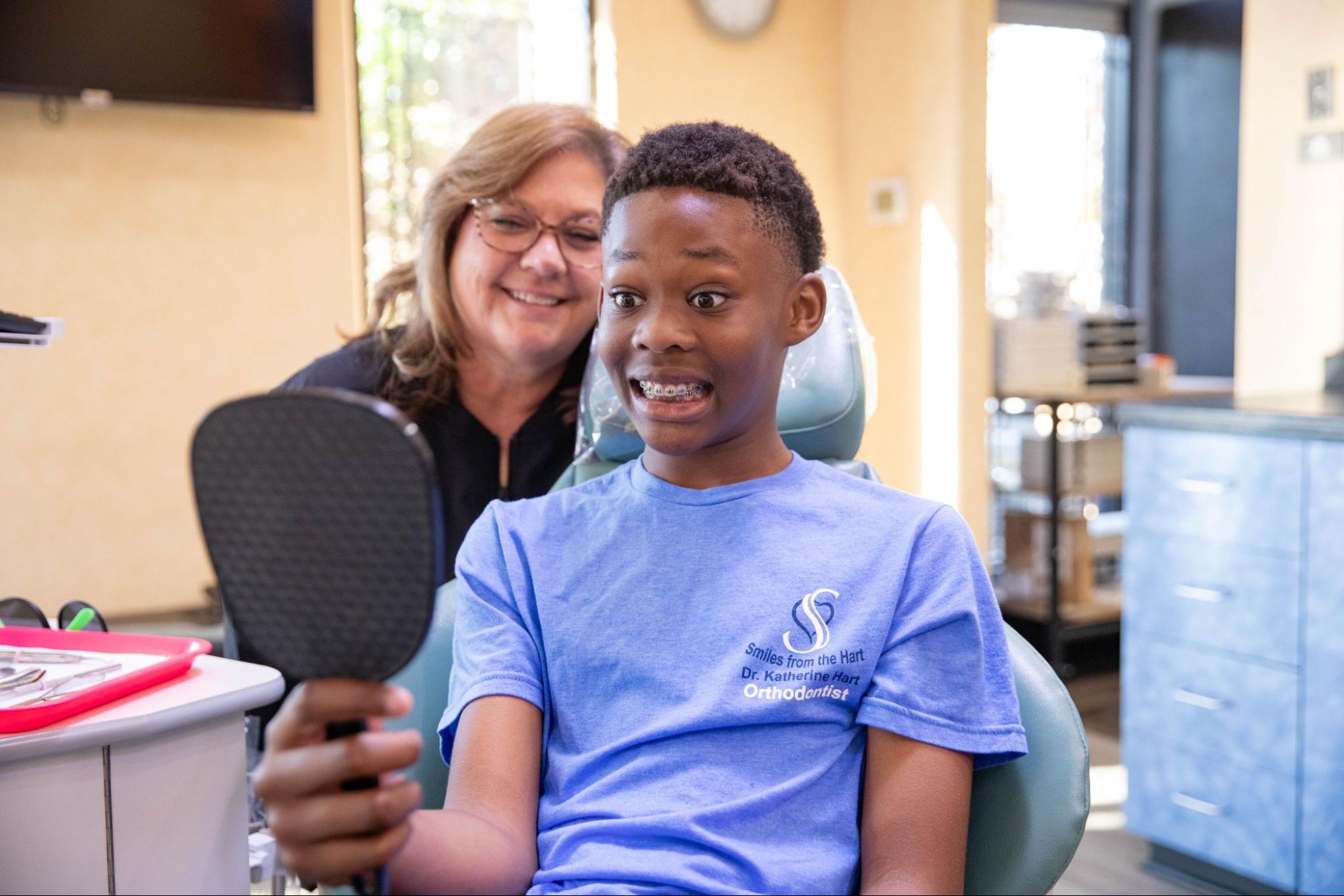
Wondering if it’s too early to bring your child in for a checkup? You’re not alone. Many parents assume orthodontic care is only for teens with a mouth full of metal, but the best time for a child to see an orthodontist starts much earlier than you might think.
Here’s what every parent in Middle Tennessee should know about early orthodontic care and why age 7 is the magic number.
The AAO Recommends Age 7 for a Child’s First Orthodontic Visit
The American Association of Orthodontists (AAO) recommends that every child see an orthodontist by age 7. This doesn’t mean your child will need braces at 7. It simply means this is the ideal age for a first evaluation, because your orthodontist can spot issues while the jaw is still growing.
By age 7, most children have a mix of baby teeth and permanent teeth. This stage is called mixed dentition, and it gives Dr. Hart a clear window into how the bite is developing, how permanent teeth are erupting and whether the jaw has enough room to fit everything to come.
Here’s the good news: early evaluation rarely means early treatment. In many cases, we simply establish a baseline and monitor your child’s growth over time. If treatment is needed, we’ll explain exactly why, and if it’s not, we’ll tell you that too.
At Smiles from the Hart, your child’s first consultation is completely free. It’s a low-pressure way to get expert eyes on your child’s smile without any commitment.
How an Early Orthodontic Evaluation Works
A first visit at Smiles from the Hart is quick, easy and designed to feel welcoming for kids. Here’s what happens, step by step:
- Digital X-rays and 3D scans. We use modern digital scanners to get a detailed look at erupting teeth, jaw structure and how everything fits together. No messy molds, no discomfort.
- Bite and alignment exam. Dr. Hart examines your child’s bite, spacing, tooth position and jaw development to identify anything that needs attention now or later.
- Review of oral habits. We ask about thumb sucking, mouth breathing, tongue thrust and other habits that can affect how the jaw and teeth develop.
- Personalized recommendation. Based on what we see, Dr. Hart will recommend one of three paths: start treatment now, monitor growth over time or no action needed.
If your child isn’t ready for treatment yet, Dr. Hart will let you know when to come back so she can keep an eye on how their smile is developing and catch anything the moment it needs attention.
Can’t make it into the Smiles from the Hart office? We also offer virtual consults, so busy families can get Dr. Hart’s expert opinion from home.
Benefits of Early Orthodontic Evaluation
Catching orthodontic issues early can make a real difference in your child’s long-term dental health. Here’s why an early visit is worth it:
- Guide jaw growth. While your child’s bones are still developing, Dr. Hart can gently direct jaw growth to create room for permanent teeth.
- Reduce or eliminate the need for extractions. Early intervention often means fewer teeth need to be removed later to make space.
- Correct harmful habits. Thumb sucking, prolonged pacifier use and mouth breathing can all shift teeth and reshape the jaw. Catching these early prevents bigger problems.
- Prevent trauma to protruding teeth. Kids with pronounced overbites are much more likely to chip or break their front teeth during play or sports. Early treatment can pull those teeth into a safer position.
- Support easier breathing. When a narrow upper jaw is part of the picture, widening it early can make it easier for some kids to breathe through their nose.
- Simplify treatment later. When early issues are addressed, Phase 2 treatment during the teen years is often shorter and less involved.
Think of early evaluation as preventive care. Just like you take your child to the pediatrician for regular checkups, an orthodontic visit adds another layer of protection for their growing smile. And because Dr. Hart’s approach puts people before profits, you’ll never be pressured into treatment your child doesn’t actually need.
Phase 1 vs Phase 2 Orthodontic Treatment: What’s the Difference?
When early treatment is recommended, it usually happens in two stages called Phase 1 and Phase 2. Here’s how they compare:
| Feature | Phase 1 (Interceptive) | Phase 2 (Comprehensive) |
|---|---|---|
| Age Range | 7-10 years old | 11+ years old |
| Appliances Used | Palatal expanders, partial braces, space maintainers | Full metal braces, clear braces or Invisalign |
| Typical Duration | 6-12 months | 12-24 months |
| Main Goal | Correct skeletal and jaw issues while bones are still growing | Final alignment of all permanent teeth and bite refinement |
| Follow-Up | Monitoring period until permanent teeth erupt | Retainers to hold results |
Phase 1 focuses on the underlying structure. If the upper jaw is too narrow, an expander can widen it while the bones are still soft. If baby teeth are lost too early, space maintainers keep everything in position for permanent teeth to come in properly.
Phase 2 happens once all permanent teeth are in. This is when full braces or Invisalign refine the alignment of the entire smile, creating that final, polished result.
Here’s what matters: not every child needs two phases. Many kids skip Phase 1 entirely and go straight to Phase 2 as teenagers. Dr. Katherine A. Hart will only recommend Phase 1 if it will genuinely benefit your child. Honest recommendations are part of the promise at Smiles from the Hart.
Signs Your Child Should See an Orthodontist Now
Even before age 7, certain warning signs mean it’s time to book a visit. Watch for these:
- Baby teeth lost too early or too late
- Difficulty chewing, biting or speaking clearly
- Mouth breathing or snoring at night
- Visible crowding, gaps, overbite, underbite or crossbite
- Thumb sucking or pacifier use past age 4
- Jaw that shifts, clicks or makes popping sounds
- Teeth that don’t meet properly when biting down
- Facial imbalance or a jaw that appears to grow to one side
If you’re checking off even one of these signs, it’s a good idea to schedule a free consult. Early evaluation gives you answers and peace of mind.
Frequently Asked Questions About Kids and Orthodontists
Should my 7 year old see an orthodontist?
Yes. The American Association of Orthodontists recommends that every child have an orthodontic evaluation by age 7. This doesn’t mean treatment is needed right away. It means an orthodontist can spot potential issues early, when they’re easier to guide and correct.
Is 7 years old too early for braces?
Seven is not too early for an evaluation, but it’s often too early for full braces. Most children who need Phase 1 treatment at this age receive expanders, partial braces or space maintainers, not a full set of brackets. Full braces or Invisalign usually come later, once more permanent teeth have erupted.
Does my 8 year old really need an expander?
An expander is only recommended if your child’s upper jaw is too narrow to fit all their permanent teeth or if they have a crossbite. Expanders work best while the bones of the palate are still growing and can be gently widened. If Dr. Hart recommends an expander, she’ll walk you through exactly why it’s the right choice for your child.
Can a 7 year old go to the orthodontist?
Absolutely. First visits are quick, comfortable and designed to feel friendly for young kids. At Smiles from the Hart, your child’s first consultation is free, and there’s no obligation to start treatment. We take a look, share what we see and give you honest guidance.
How long will my child need braces?
Most orthodontic treatments last between 12 and 24 months, though the exact timeline depends on your child’s specific needs. Phase 1 treatment is often shorter, around 6-12 months, followed by a monitoring period before Phase 2 begins if needed.
What if my child is older than 7?
It’s never too late to see an orthodontist. While age 7 is ideal for a first evaluation, kids, teens and even adults can benefit from orthodontic care at any age. If your older child hasn’t been evaluated yet, book a free consult and we’ll get you caught up.
Ready to Get Started?
If your child is approaching age 7, or already past it, now is a good time to book a free consult with Dr. Hart. You’ll get honest, personalized guidance from a friendly orthodontist who genuinely cares about your family’s experience.
Families across Murfreesboro and Middle Tennessee trust Smiles from the Hart, one smile at a time. Come see what a difference a Hart can make.
Book your child’s free consultation today and give your child’s smile the strong start it deserves.